
Costa Almeria
Spain’s Quiet Coastal Gem
The Region
The coastline stretches across 217 kilometers of southeastern Spain, from Pulpí near Murcia to Adra bordering Granada. This coastal ribbon includes 13 municipalities, each offering a unique blend of Mediterranean charm, cultural depth, and natural beauty. With its tranquil beaches and sun‑drenched landscapes, Costa Almeria remains one of Andalusia’s most authentic coastal regions.
Along the route, well‑known coastal towns such as Vera, Mojácar, Garrucha, and Roquetas de Mar add character and variety. Each destination brings its own atmosphere, from Vera’s wide sandy beaches to Mojácar’s whitewashed hillside village, Garrucha’s fishing traditions, and Roquetas de Mar’s lively seaside promenades.
The region is also divided into three distinct comarcas, each shaping the identity of Costa Almeria in its own way. Levante Almeriense offers rugged coastlines and charming villages. The Comarca Metropolitana de Almería blends urban energy with historic heritage. Poniente Almeriense features fertile plains, modern resorts, and long stretches of coastline. Together, they create a diverse and inviting Mediterranean landscape.
Costa Almeria – Tourism and Destinations
Tourism in this area has experienced consistent and steady growth over the years, largely due to its inviting warm climate and a wide variety of attractions that appeal to many different types of visitors. Originally, the region was promoted as part of the Costa del Sol back in 1928; however, over time, the name gradually shifted to focus more on Málaga, which allowed Costa Almeria to develop and define its own unique identity and charm. Nowadays, travelers from all over the world are drawn to popular destinations such as Vera, Mojácar, Roquetas de Mar, and El Ejido, all of which are celebrated for their laid-back atmosphere and picturesque coastal landscapes. Additionally, nature enthusiasts have plenty to explore with stunning natural parks like Cabo de Gata-Níjar and Punta Entinas-Sabinar, while the Isla de Alborán offers a secluded and pristine marine escape, perfect for those seeking tranquility and unspoiled beauty.
Historical Legacy
Costa Almeria holds centuries of deeply layered and fascinating history. Prehistoric cultures such as Los Millares and El Argar left behind striking and well-preserved archaeological remains that reveal much about early human life in the region. Over the centuries, the Phoenicians, Greeks, and Romans mined the rich land and engaged in extensive trade along its picturesque shores, shaping the cultural and economic landscape. In the 10th century, the Moors founded the city of Almería as a prominent capital, establishing and ruling over one of Spain’s most influential and powerful taifas. Their remarkable legacy continues to live on today in the form of impressive castles and fortresses scattered throughout the landscape, offering valuable insight into past societies, their achievements, and the resilience they demonstrated through changing times.
Natural Landscapes
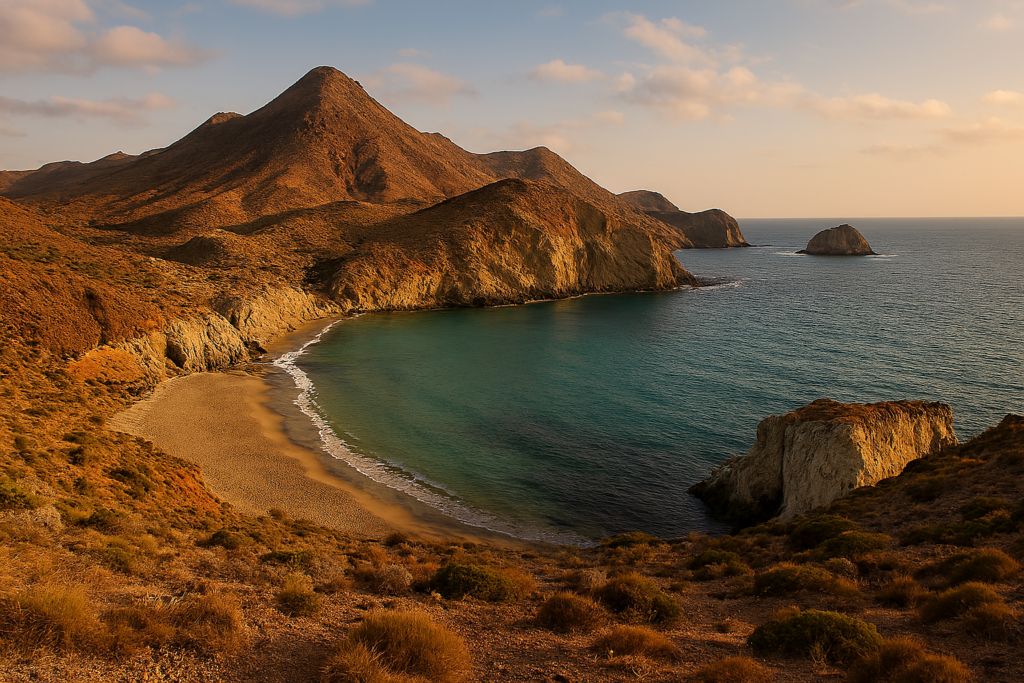
The region’s terrain is as varied as its history. Snow-capped sierras, Mediterranean forests, desert plains, and wild beaches coexist in harmony. The Sierra María-Los Vélez Nature Reserve features ancient caves, a hilltop castle, and rich biodiversity. Meanwhile, Cabo de Gata-Níjar stuns visitors with its volcanic cliffs, transparent sea beds, and untouched coves. Costa Almeria invites travelers to experience snow, desert, and sea — often in a single day. The Cabo de Gata area reveals one of Spain’s most dramatic coastal landscapes. Low volcanic mountains rise above a coastline carved into cliffs, coves, and hidden beaches. The region is known as one of the driest places in Europe, and its sub‑desert climate shapes the rugged scenery. Yet along the shore, you still find stretches of soft sand, quiet lagoons, and calm turquoise water. Offshore, tiny rocky islets and vibrant coral reefs create a haven for marine life.
The Sierra del Cabo de Gata mountain range dominates the horizon, with El Fraile standing as its highest peak. These volcanic formations display striking red and ochre tones, giving the land an almost otherworldly character. The mountains drop sharply into the Mediterranean, forming jagged cliffs that reach nearly 100 meters in height. Deep gullies cut through the rock, opening into secluded coves and bright, white-sand beaches that feel untouched and wild.
Cultural and Architectural Heritage
Beyond its stunning natural landscapes, Costa Almeria reveals its true soul through its rich architecture and deeply rooted traditions. Charming whitewashed villages cling gracefully to rugged hillsides, creating picturesque scenes, while the vibrant coastal towns showcase a captivating blend of Moorish and Andalusian architectural styles. Historic churches, ancient watchtowers, and buildings from the mining era stand as enduring symbols that reflect the region’s complex and layered past. Local festivals, traditional cuisine, and handcrafted arts continue to preserve and celebrate this unique cultural identity, offering visitors an authentic and immersive taste of the vibrant life and heritage of southern Spain.
Why the Costa Almeria Stands Apart
Unlike the more heavily commercialized and crowded coastal areas, Costa Almeria provides a unique sense of serenity, genuine authenticity, and plenty of space to breathe and relax. Its breathtaking landscapes remain largely untouched by mass tourism, while the charming towns maintain a warm, welcoming atmosphere without feeling overdeveloped or spoiled. Whether you are in search of peaceful, quiet beaches, rich historical depth, or awe-inspiring natural wonders, Costa Almeria offers a slower, more unhurried rhythm that allows for a deeper, more meaningful connection to the true essence of Spain’s vibrant Mediterranean soul.
Interesting links
The city of Almeria
Landscapes in the province of Almeria
Play Golf in Spain