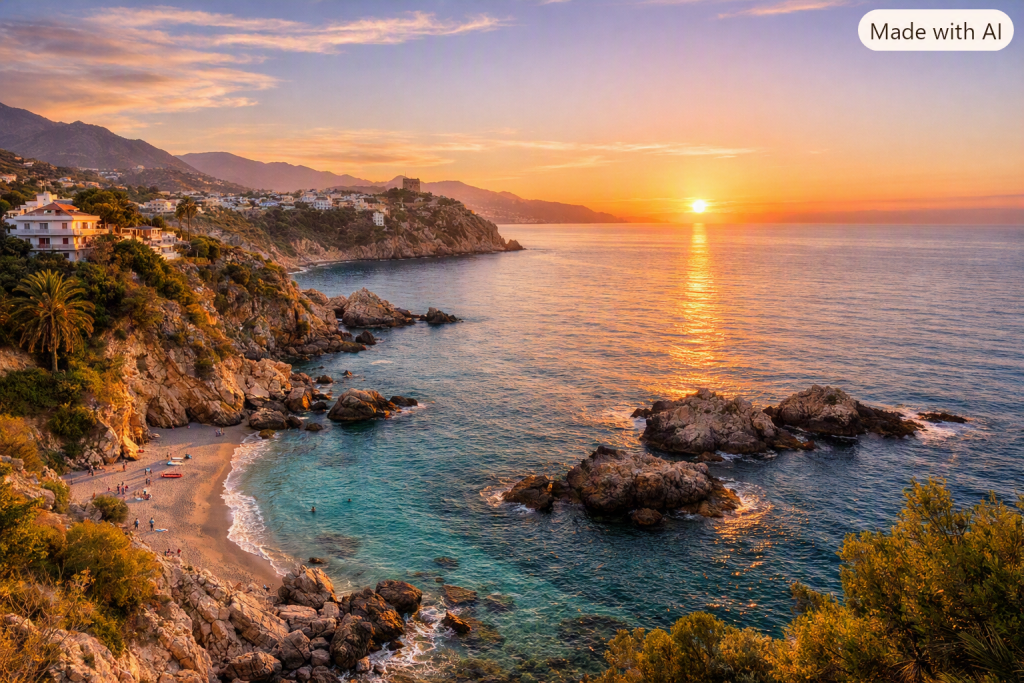
Costa Tropical
⭐ A Subtropical Mediterranean Region With Deep Cultural Roots
Costa Tropical lies along Granada’s coastline, positioned between the Costa del Sol and the Costa de Almería. This part of southern Spain enjoys a rare subtropical climate shaped by the Mediterranean Sea and the sheltering Sierra Nevada and Sierra de Lújar mountains. Their protection keeps inland cold air away, creating warm winters, mild summers and more than 300 sunny days each year. Because of these conditions, tropical fruits such as mango, avocado and cherimoya flourish, giving the region its distinctive identity.
🌿 Costa Tropical – Scenic Landscapes and Andalusian Village Charm
The area features coastal towns and whitewashed mountain villages set among green valleys, hillsides and seaside cliffs. Narrow streets, intimate squares and centuries‑old architecture give each village a strong Andalusian character. Many visitors consider costa tropical granada’s coastline one of the most beautiful stretches in southern Spain.
Almuñécar and La Herradura form the region’s vibrant tourist center. Almuñécar rises on a hill between two rivers, surrounded by dramatic mountains, while La Herradura is known for its horseshoe‑shaped bay with crystal‑clear waters ideal for diving and sailing.
Salobreña, often called “the jewel of Costa Tropical”, sits on a rocky hill crowned by a Moorish castle overlooking the sea. Its mix of beaches, white houses and Sierra Nevada views creates a postcard‑perfect setting. Motril, the largest town, offers a lively marina, fishing port and strong local economy. Castell de Ferro adds rugged cliffs and secluded coves to the coastline’s diversity.
🏛️ A Coastline With Thousands of Years of History
Costa Tropical has one of Spain’s richest historical legacies. Phoenician traders settled here, Romans built aqueducts and garum factories, and the region later became part of the Nasrid Kingdom of Granada. Abd al‑Rahman I landed on these shores before founding the Umayyad dynasty in Al‑Andalus. During the Middle Ages, sugar production shaped the economy, and several seaside castles served as summer residences for Granada’s sultans.
Visitors can explore Roman aqueducts, Phoenician necropolises, Moorish fortresses and ancient defensive structures — each town revealing layers of history.
✈️ Easy Access and Excellent Connections
Three airports connect the region efficiently:
- Málaga
- Granada
- Almería
Modern highways A7 and A44 make costa tropical granada’s coastline easily accessible for residents and international travelers.
🌊 Beaches, Nature and Outdoor Activities
The coastline offers long sandy beaches, rocky coves, valleys, mountains, scenic hiking routes, diving, sailing, water sports, cultural attractions, gastronomy and lively local markets. It suits nature lovers, history enthusiasts, families and long‑term residents alike.